 Puff pastry is is close to alchemy as baking gets. As Joe puts it, 'it’s comprised of hundreds and hundreds of individual layers of dough, all of them separated by ultra-thin layers of butter. When the pastry is inserted in the oven the butter melts, freeing and lubricating the dough sheets so they can separate from one another.' The result? Hundreds of layers of feather-light, fragile sheets of buttery goodness shattering in your mouth, vanishing into nothing. As with all good things, it's ephemeral, and you can't help but give it another bite to re-experience that nanosecond of hedonistic pleasure. It's one of the most wondrous gastronomic sensations one could have.
All good things come at a price; and puff pastry takes a lot of time to make and even longer to master the art. You need to make a dough (détrempe) which encases a butter slab, from there you begin a process of folding and turning that can easily take half a day. As much as I love puff pastry, I usually go for 'quick' puff pastries, which skip the process of making a dough and a butter slab. In this quick version, you partially mix the butter into the dough. As you roll out the dough, the butter bits are stretched to laminate the dough. The other shortcut is that instead of having six folds, there're only four. It doesn't provide as dramatic a rise as a real puff pastry dough, but the result is good enough for most purposes, and vastly superior to anything you can buy. The following recipe is one by Flo Braker's from her Baking for All Occasions.
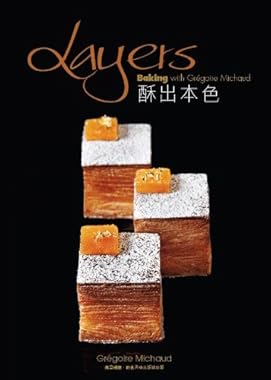 |
| For lovers of puff pastry, I highly recommend the fantastic book by Gregoire Michaud. The imagination behind his puff pastry creations is staggering! |
gluten formation and therefore ensures that your final product will be light. Be sure to use the best butter you can find, preferably an European high-butterfat butter, and use a scale to weight the flour. Once you have made your puff pastry, there're endless pastries you can make. From palmiers to puff pastry tarts and mille-feuille, the possibilities are endless.

 |
| Tarte à la crème |


